
You Hear It Before You See It
You're backing out for work, coffee in one hand, garage remote in the other, and the door makes a sound it's never made before. Maybe it's a metallic grind that sets your teeth on edge. Maybe it's a squeal sharp enough to make you wince. Maybe there's a pop as the door starts moving, or a steady rattle the whole way up. Whatever it is, you notice it immediately because garage doors are supposed to be boring. A new noise means something changed, and in a climate like ours, with humidity swelling wood panels and summer storms stressing hardware, something usually has.
Here's how to read each sound, and what a technician checks first when they hear it.
Grinding: The Sound of Metal Fighting Metal
Grinding usually shows up as a low, mechanical growl that happens at the same point in the door's travel every time, often right as it starts or stops.
- Opener gear first. A technician checks the opener's drive gear before anything else, because a worn or stripped gear is the most common source of a grinding opener. If the gear teeth are chewed down, the fix is a gear replacement, not a full opener swap, in most cases.
- Rollers next. Nylon rollers that have cracked or gone flat on one side grind as they turn against the track. Replacing rollers is a straightforward repair and a good opportunity to upgrade to sealed, self-lubricating ones if the door sees a lot of daily use.
- Track alignment last. If the rollers and gear check out fine, the track itself may have shifted slightly, often from a bumped car or a loose mounting bracket. Realigning the track stops metal from scraping metal with every cycle.
Squealing: Almost Always a Lubrication Problem
Squealing is sharper and higher-pitched than grinding, and it tends to get worse, not better, the longer the door runs without attention.
- Hinges and rollers. This is the first stop, since dry hinge pivots and roller bearings are the most common cause. A light coat of garage-door-specific lubricant, not WD-40, usually quiets things down within a cycle or two.
- Torsion springs. If lubrication doesn't fix it, the springs themselves may be dry or beginning to wear unevenly. This matters more here than in drier climates, since Central Florida humidity accelerates corrosion on unprotected spring coils. A technician will inspect for rust pitting and recommend lubrication or replacement depending on the spring's condition.
- Opener chain or belt. A dry chain-drive opener can squeal independently of the door hardware. Chain lubrication is quick, but a belt that's squealing from fraying usually needs replacing.
Popping: Something Is Releasing Tension Suddenly
Popping is a sharper, one-time sound rather than a continuous noise, often heard right as the door starts to move or right before it stops.
- Loose hardware. Bolts and brackets on the track or spring system can work loose over time, especially after the vibration of repeated storm-season wind loads. A tech checks and torques these first, since it's the simplest fix.
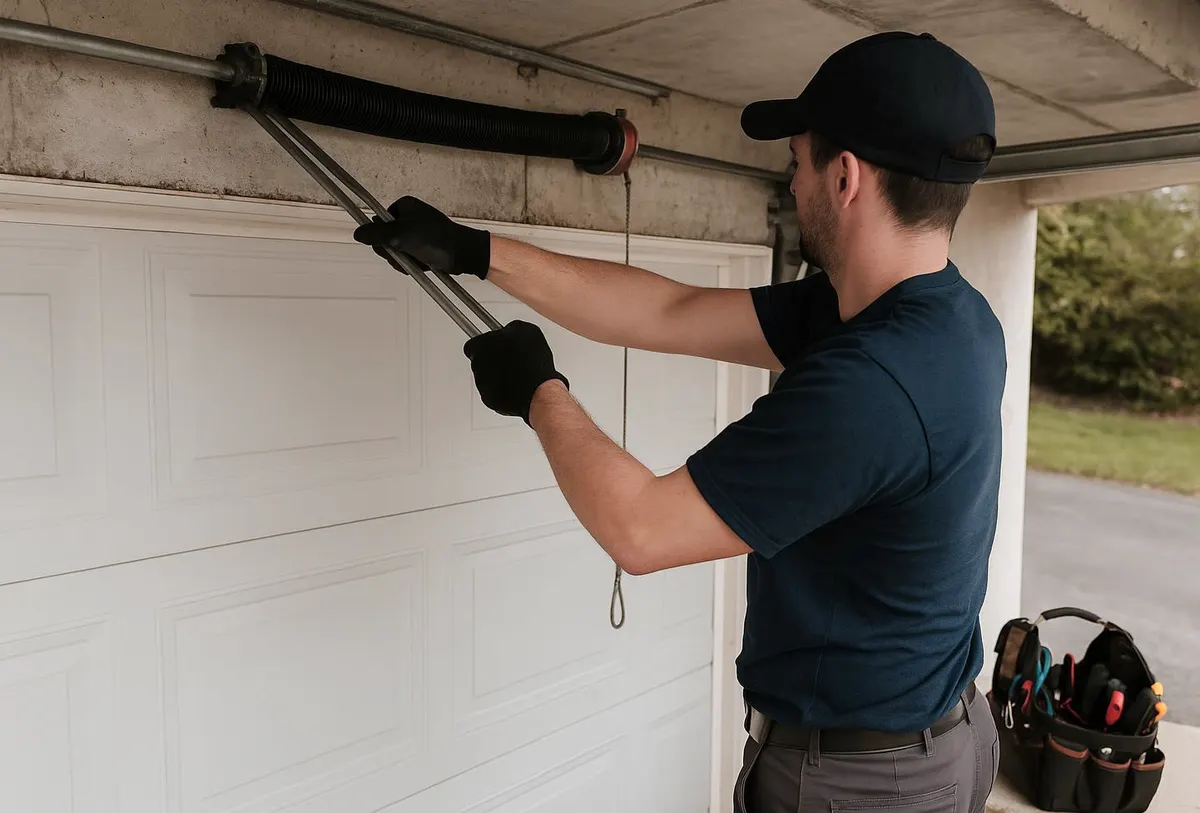
- Spring tension. A popping sound during operation can mean a spring is unwinding unevenly or beginning to fail. This is checked carefully and from a safe distance, since torsion springs hold significant stored force and shouldn't be adjusted by anyone without the right tools.
- Panel flex. On wood or wood-composite doors, humidity swelling can cause panels to pop as they flex against hinges or the frame. If this is the cause, hardware adjustment or, in older doors, panel replacement is the long-term fix.
Rattling: Usually Loose, Not Broken
Rattling tends to run the full length of the door's travel rather than happening at one spot, and it often gets worse on windy days.
- Hardware fasteners. Hinges, track brackets, and roller brackets loosen gradually with use. Tightening them is a maintenance item, not a repair, and it's one of the first things checked during a routine tune-up.
- Worn rollers or hinges. If tightening doesn't quiet the rattle, worn components allowing extra play in the track are usually next. Replacement stops the slack that causes the noise.
- Wind-rated hardware. On doors built to meet wind-load requirements, rattling can also point to a reinforcement strut or bracket that's come loose. This is worth addressing before hurricane season, not after.
When to Call Kathleen Garage Door Experts
If the noise doesn't go away after basic lubrication, if it's paired with jerky movement, or if you'd rather have someone else near a loaded torsion spring, that's the point to call in a technician. We offer Garage Door Maintenance & Tune-Up visits that catch loose hardware and worn rollers before they turn into bigger repairs, and Garage Door Spring Repair for doors that are squealing or popping from spring wear. We'll diagnose the noise at its source rather than guessing, and explain what we find before any work starts.
If your garage door in Kathleen, FL is making a sound you don't recognize, give Kathleen Garage Door Experts a call. We serve Kathleen, Lakeland, Mulberry, Plant City, Bartow, Winter Haven, Auburndale, and Polk City, and we can usually get a technician out fast.