
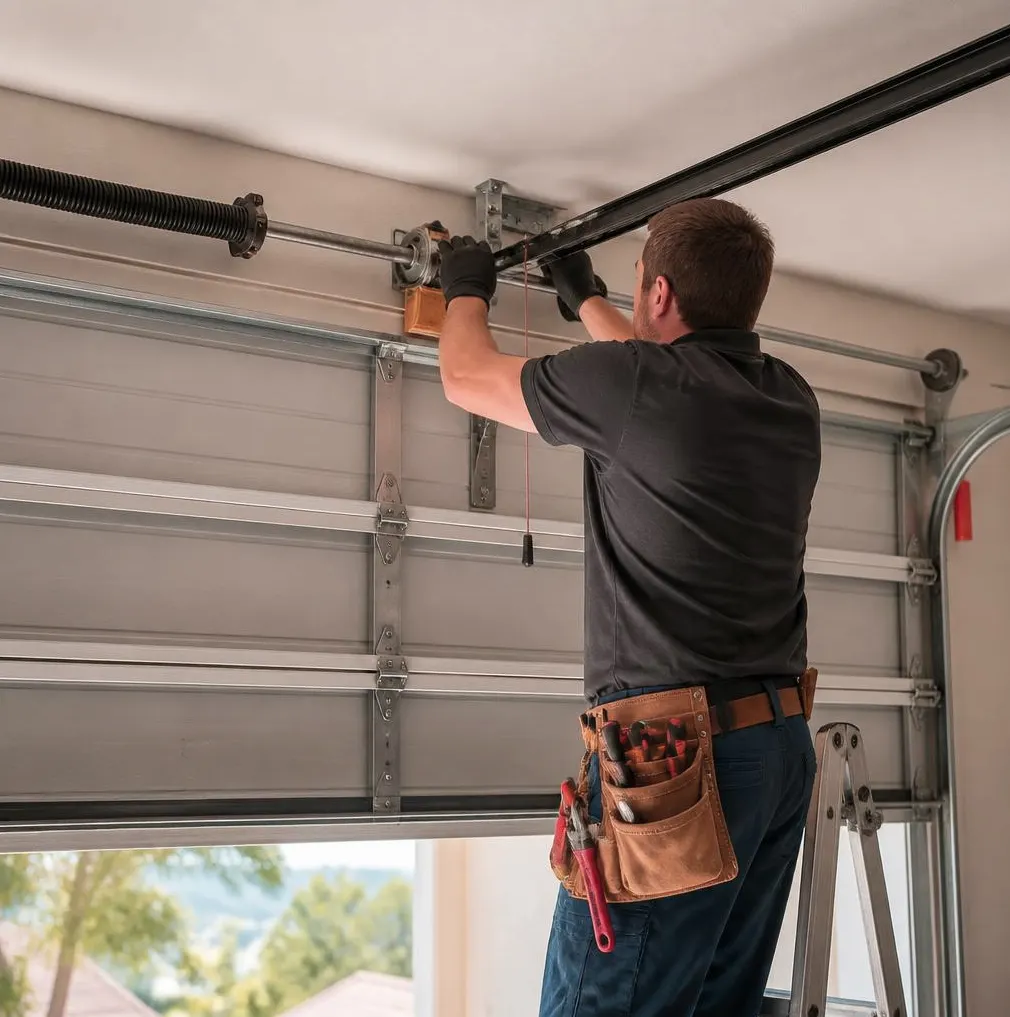
The Moment You Notice Something's Off
It usually happens on an ordinary morning. You hit the opener button on your way to work, and the door doesn't glide up the way it always has. Maybe it jerks halfway, maybe it groans louder than usual, or maybe one side lifts a beat before the other. You shrug it off because the door still opens. That hesitation is worth paying attention to, because garage door springs rarely fail without warning. They tend to wear down slowly, especially in a climate like ours where heat, humidity, and sudden storms put extra stress on the metal all year.
Before a spring snaps, it almost always leaves clues. Here's a checklist you can walk through in your own garage, with what each sign means if it's pointing to real trouble.
Checklist: Signs Your Springs Are Wearing Out
1. Look at the spring itself (torsion springs, above the door)
- Visible gaps between coils: A healthy torsion spring sits with coils close together. If you see wide, uneven gaps, the spring has stretched past its working tension and is losing lift strength.
- Rust or flaking on the coils: Florida humidity and the occasional salt-tinged breeze inland from the coast speed up corrosion. Light surface rust is common; flaking, pitting, or a reddish-orange coating that rubs off is a sign the metal is weakening from the inside out.
- A visible gap or separation in the coil: If part of the spring looks like it's pulling apart at one point, that's a fracture starting. Don't test the door by hand at this stage—call for a repair instead.
2. Check the extension springs (if your door uses them, usually along the horizontal tracks)
- Stretching beyond the safety cable: Extension springs should stay coiled even at full extension. If the spring looks stretched thin or the coils have spread apart permanently, it's lost tension and is close to failing.
- Fraying or rust on the safety cables: These cables are there specifically to stop a broken spring from whipping across the garage. If they're frayed or rusted through, you've lost your backup safety net even if the spring itself looks fine.
3. Watch how the door moves
- Uneven lifting, one side higher than the other: This usually means one spring is weaker than its pair. Springs age in sets, but they rarely wear out at exactly the same rate.
- Door drops faster than it used to: If closing feels like it's speeding up or slamming instead of lowering smoothly, the springs are no longer controlling the weight properly.
- Opener straining or overheating: A garage door opener isn't built to lift the full weight of the door—it's built to assist springs that are doing most of the work. If the motor sounds like it's working hard, or shuts off mid-cycle from overheating, worn springs are likely forcing it to compensate.
4. Run the manual balance test
Disconnect the opener using the release cord, then lift the door by hand about halfway. A properly balanced door with healthy springs will stay in place on its own. If it falls, or if it feels heavy and uneven, the springs are no longer carrying their share of the load. This is one of the clearest field tests available without any tools.
5. Listen for sound changes
- Loud bangs or pops during operation: Often this is a coil shifting or a small fracture under tension, not just normal creaking.
- Grinding or squealing that wasn't there before: Rust buildup from humidity can cause coils to rub against each other instead of flexing smoothly.
6. Factor in age and recent weather stress
Torsion and extension springs have a working lifespan measured in open-close cycles, not years, so a door used multiple times a day wears out faster. Hurricane-season storms with sudden wind loading, plus the swelling that humidity causes in wood and composite doors, add extra strain on springs that are already working at their limit. If your door has been through a rough storm season, it's worth running this checklist even if nothing seems obviously wrong yet.
When to Call Kathleen Garage Door Experts
If you spot rust pitting, coil gaps, an unbalanced door, or a motor that's straining, it's time to call rather than keep testing it yourself—a spring under tension can cause real injury if it lets go while you're working near it. Our Garage Door Spring Repair service replaces worn torsion or extension springs with the correct size and tension for your door, matched to the wind-load and weight requirements common in this area. If the springs check out fine but the door still feels off, our Garage Door Maintenance & Tune-Up service covers lubrication, hardware checks, and balance adjustments that can add real life to the springs you already have.
If you're in Kathleen, FL or anywhere nearby in Polk County and your garage door is giving you any of these warning signs, call Kathleen Garage Door Experts today and we'll come take a look before a worn spring turns into a bigger problem.